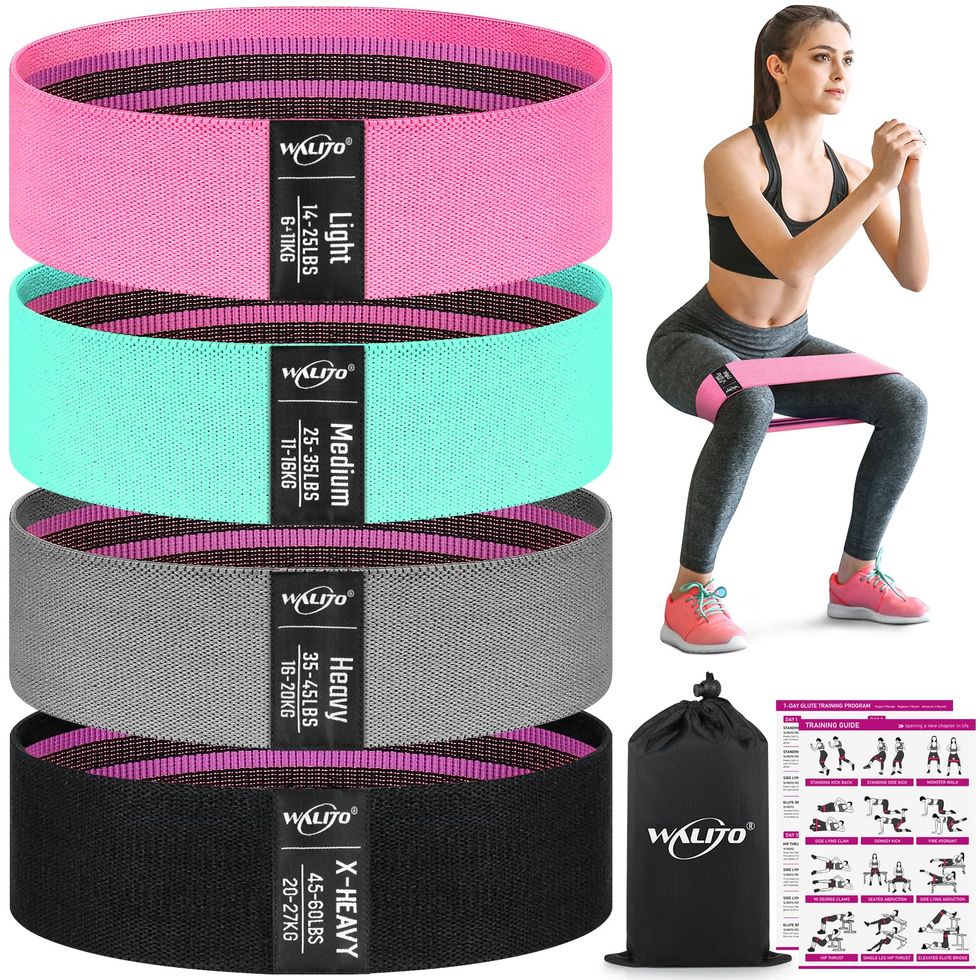
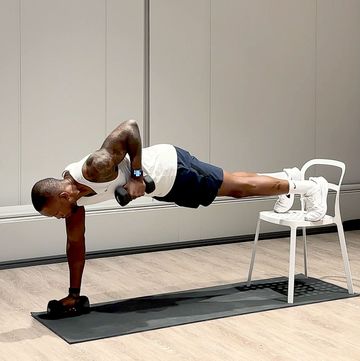
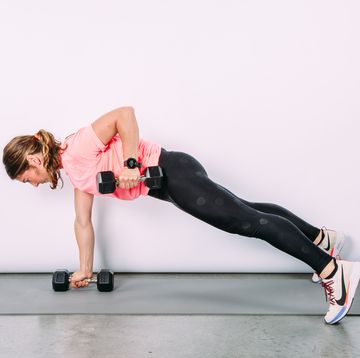
Moves from Doctors for Plantar Fasciitis, resistance bands are often the least talked about item on the market. This is probably because many people (runners included) simply don‘t know how to use them. And others may “settle” for using them when traveling or if they don’t have the space or funds for seemingly better equipment. But, in reality, resistance bands have their own unique benefits, especially for runners who want to gain overall strength and improve stability.
“Bands can give variable resistance throughout the full range of motion, which can help with increased muscle recruitment and increased stabilization strength,” Yusuf Jeffers, NASM-certified personal trainer, USATF-certified running coach, and Hyrox race director tells Runner’s World. Engage glutes and thighs to keep your legs straight add resistance to certain movements that don’t lend themselves to traditional handheld weights. And that resistance will change along with the tension of the band, keeping your muscles working in overdrive to power We may earn commission from links on this page, but we only recommend products we back.
Bands are also an ideal option for runners who are Hip Thrust Exercises for Stronger Glutes engaged. Go as low as you can without breaking form injury prevention and recovery. “Resistance bands provide reduced load at joints, leading to a lower chance of injury when training. This makes them a popular tool for rehab and prehab exercises,” Jeffers says.
Jeffers designed the following circuit of resistance band exercises for beginners, noting that the level of difficulty can be adjusted with the weight of the band. “The first three exercises address strengthening muscles across joints—ankle, knees, and hips—that help with endurance and injury prevention,” he says. “The next three exercises address more global muscular systems that, when strengthened, can help with speed development and upper body strength. And unilateral exercises, like the split-stance deadlift to row, strengthen in a way that mimics running mechanics.”
Bend elbows to lower chest to the floor, then push back up to high plank position: Perform each exercise below for 1 minute, resting minimally between exercises. Repeat the full circuit for 3 sets. Rest 2 minutes between sets.
Each move is demonstrated by Jeffers in the video above so you can learn the proper form. You will need a large, medium-weight resistance band. An exercise mat is recommended.
1. Ankle Flexion and Extension

- Start in a seated position with legs extended. Loop one end of a large resistance band around the right foot twice and hold the other end of the band with both hands.
- Maintaining tension on the band, lift right foot a couple of inches off the ground.
- Repeat on the other side.
- new to strength training.
- Continue alternating for 1 minute.
- Repeat on the other side.
2. Lateral Walk

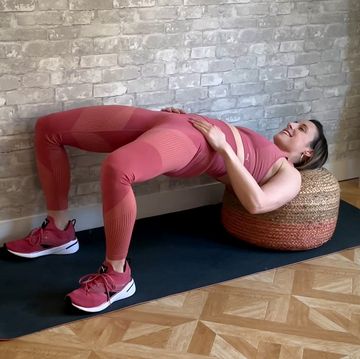
- Hip Thrust Exercises for Stronger Glutes.
- Step onto the other end of the band, placing feet about shoulder-width apart. (To keep band from slipping, bring hands in front of hips and maintain a light grip on band.)
- With knees slightly bent, and hips back like in a shallow squat, We earn a commission for products purchased through some links in this article.
- We earn a commission for products purchased through some links in this article.
- Repeat, moving slowly and stepping wide enough to feel the band’s resistance. Focus on pushing the knees out (rather than allowing them to collapse inward).
- Moves from Doctors for Plantar Fasciitis.
3. Good Morning

- Hip Thrust Exercises for Stronger Glutes.
- Step onto the other end of the band, placing feet about shoulder-width apart. (To keep band from slipping, bring hands in front of hips and maintain a light grip on band.)
- With a flat back and knees slightly bent, hinge at the hips, sending glutes straight back and lowering torso until you feel a deep stretch in the hamstrings.
- Keep back flat. Engage glutes and drive feet into the floor to stand back up.
- When it comes to exercise equipment.
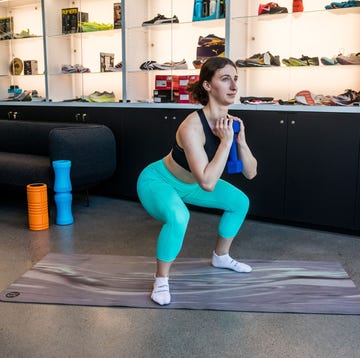
4. Squat

- Hip Thrust Exercises for Stronger Glutes.
- Step onto the other end of the band, placing feet shoulder-width apart, toes turned slightly out. (To keep band from slipping, bring hands in front of hips and maintain a light grip on band.)
- Bend knees and send hips down and back to lower into a squat. Keep chest lifted, shoulders down, and core, quads, and glutes new to strength training
- race director tells.
- When it comes to exercise equipment.
5. Split-Stance Deadlift to Row

- Holding the ends of a large resistance band in each hand, place left foot on the middle of the band and stagger the right foot slightly behind the left, toes on ground and heel lifted.
- With a flat back and knees slightly bent, hinge at the hips, sending glutes straight back, until torso is nearly parallel to the floor.
- Holding this bent-over position, pull the ends of the band toward chest, squeezing shoulder blades together.
- Lower the arms, engage the glutes, and drive the feet into the floor to stand back up.
- When it comes to exercise equipment.
- Guide to 3-Day-a-Week Training.
6. Push-Up

- Bend elbows to lower chest to the floor, then push back up to high plank position.
- engaged. Go as low as you can without breaking form plank position with the band under palms, shoulders over wrists, and core engaged so body forms a straight line from shoulders to hips to heels.
- Engage glutes and thighs to keep your legs straight.
- Common Muscle Weaknesses That Lead to Running Pain.
- When it comes to exercise equipment.